Dry eye is very common and often worse during the winter when the wind blows cold air and when our furnaces pump drier air throughout our homes. You may develop dry spots on your eye that cause watering. Dry eye syndrome results from a decrease in the amount or quality of the eyes’ natural tears. A person suffering from dry eye may report a gritty or scratchy sensation, a blurry “film” over their vision that often clears after a few blinks, and even a watery eye. Although dry eyes rarely cause serious problems, the discomfort dryness creates can have a significant impact on a person’s quality of life.
Our tears, produced by glands found in the mucous membrane lining our eyelids, are actually different layered components. The key component is a water-like layer that keeps the surface of the eye moist. A second layer made of mucus helps the water layer stabilize and adhere to the eye. The third layer is oily and prevents the water layer from evaporating. Together, these three layers form a unique tear formula, comforting our eyes with moisture and lubrication throughout the day and night.
During times of emotional stress and irritation, our eyes produce a different tear. This water-like tear flushes out irritants in the eye, yet it has very limited lubricating ability. Unfortunately, it is a natural reflex for the eye to call upon this watery tear when it detects dryness.
What Causes Dry Eyes?
There are several causes for dryness, but typically combinations of factors create the problem. Dry eyes are associated with collagen-vascular diseases such as Sjogren’s disease, lupus, and rheumatoid arthritis. Many therapeutic drugs including antihistamines, oral contraceptives, and beta-blockers contribute. Environmental factors such as heat, wind, smoke, and low humidity also play a role in symptoms. Specific activities can cause dry eyes which include prolonged computer use, reading, or drivings since the eyelids blink less frequently. As a result, fewer tears get delivered to all areas of the eye.
Take the Dry Eye Quiz
What is Meibomian Gland Dysfunction?
For most with dry eye disease, the cause of discomfort is blocked oil glands (meibomian glands) in the eyelids. These glands release an oil called meibum to cover the surface of the eyes every time you blink. When these glands become blocked or don’t work properly, they don’t release enough meibum to cover the surface of the eye, and tears evaporate more quickly than they should.
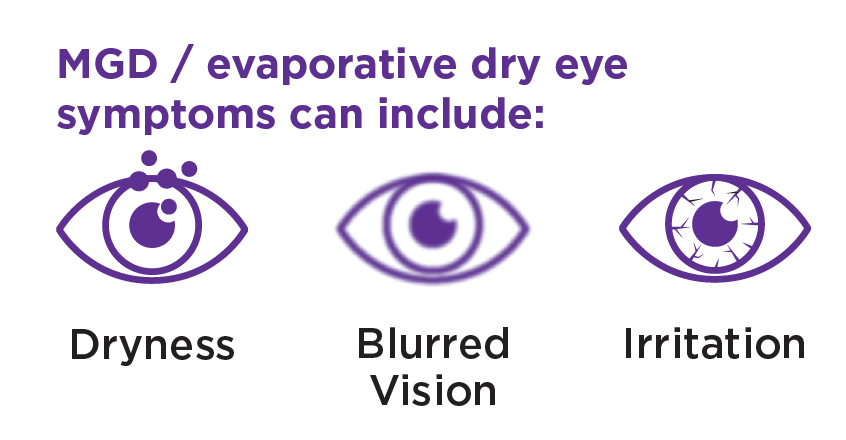
When hardened oils are trapped in the gland it may also lead to inflammation along the eyelids. Besides this, bacteria and oil can build up along the eyelashes leading to crusting, redness, and flaky dead skin known as blepharitis. You may experience itching, burning, watery eyes, or soreness because of this.
86% of Dry Eye sufferers are reported to have clinical signs of Meibomian Gland Dysfunction.
What is the Treatment for Dry Eyes?
Artificial Tears
We can treat dry eyes with over-the-counter artificial tear supplements. We recommend using them regularly, usually one drop every four hours, even if the eyes don’t “feel” dry. Remember, eyes will only feel dry once they have become dry and irritated. Frequent use of artificial tears will prevent the eyes from reaching that uncomfortable stage.
Artificial tears are packaged in either a bottle, which almost always contain a preservative, or small vials, which contain 6-8 drops and are preservative-free. Most people can safely use bottled tears up to 3 times per day with no adverse effects. However, for artificial tear usage 4 times per day or more, we usually recommend that you use preservative-free tears instead. It is okay to recap a partially used vial and save it for later use the same day, but you should discard an opened vial of preservative-free tears at the end of each day. If you use tears and continue to experience dryness or discomfort, there are several treatments we recommend.
Punctal Plugs
One effective treatment is punctal plugs. These tiny devices prevent eyes from removing tears and hold more natural tears to the surface of the eye. For maximum comfort, we recommend a combination of the artificial tears and punctal plugs.
Warm Compresses
You may use clean, hot washcloth/towel or a microwaveable compress (such as the Bruder brand eye mask) for hot compresses. Follow the instructions carefully on the microwaveable compress–do not overheat. If you use a washcloth or towel, hot tap water is adequate, but you must frequently reheat in order to maintain the temperature. Apply the compress to closed eyelids for at least 3 minutes (or up to 10 minutes), reheating compress if needed. Next, squeeze the eyes tightly shut 5 times in order to release oil from the warmed and softened glands in the eyelids. (Your doctor may have advised you to massage the eyelids with your fingertips instead.) Note that you may have blurred vision a few minutes afterward. If using the microwaveable mask, you might prefer to place a tissue or paper towel between your eyes and the mask in order to keep the mask clean.
Omega-3 Supplement
Your doctor may have recommended an oral omega-3 supplement to help with your dry eyes or blepharitis. Some recommended brands are: “Theratears Eye Nutrition”, “Nordic Naturals EPA Extra”, and “PRN De3 – Dry eye Omega Benefits”. Follow the dosing instructions on the packages.
LipiFlow Treatment for MGD
LipiFlow® is designed to treat Meibomian Gland Dysfunction (MGD), one of the most common causes of dry eye. MGD happens when the tiny oil glands in your eyelids become clogged. When that oil flow is blocked, your tears evaporate too quickly, leading to irritation, burning, and blurry vision.
During treatment, LipiFlow works from the inside of the eyelids to help clear those blockages and improve meibomian gland function. Using targeted Vector Thermal Pulse Technology, the system gently applies controlled warmth to help melt trapped oils and also delivers mild, focused pressure to help reopen the glands.
This is a non-invasive in-office treatment that takes about 15 minutes. Many patients experience long-lasting relief, and LipiFlow has been used worldwide, with over 1 million treatments performed.
Clinical studies have shown:
- A 50% reduction in mean dry eye symptom scores after treatment.3
- An increase in comfortable contact lens wear time by approximately 4 additional hours per day.6
References 3. Blackie CA, Coleman CA, Holland EJ. The sustained effect (12 months) of a single-dose vectored thermal pulsation procedure for meibomian gland dysfunction and evaporative dry eye. Clin Ophthalmol. 2016;10:1385-1396. 6. Blackie CA, Coleman CA, et al. A single vectored thermal pulsation treatment for meibomian gland dysfunction increases mean comfortable contact lens wearing time by approximately 4 hours per day. Clin Ophthalmol. 2018 Jan;12:169-183.
Where Can I get More Information?
To determine if you have dry eyes, the doctors at Milwaukee Eye Care perform simple and efficient tests during your regular exam to detect any tear layer deficiencies that may exist. To schedule an appointment call 414-271-2020.